
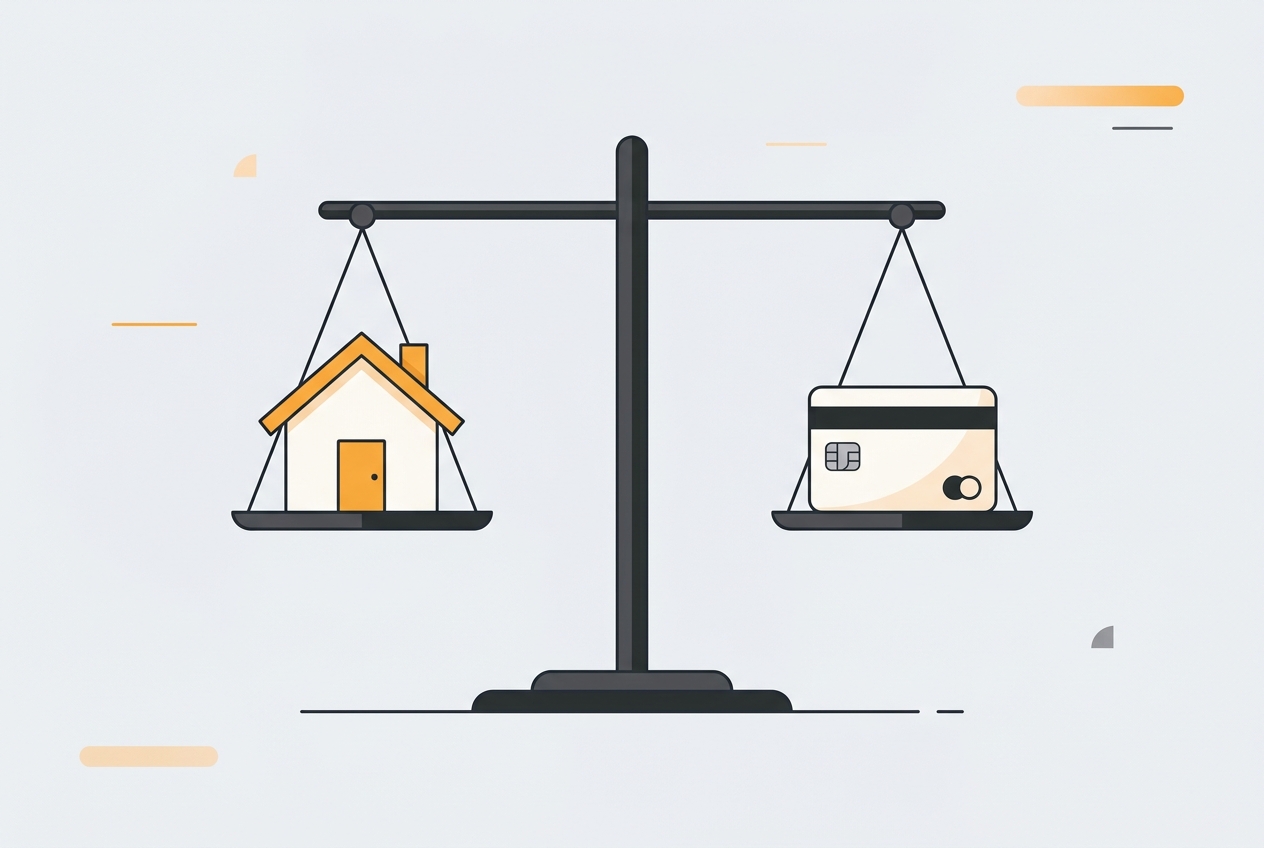
Debt is a common topic in personal finance. Many financial experts preach that all debt is bad and should be avoided at all costs. While avoiding debt is a safe path, the reality is more nuanced. Some forms of debt can help you build wealth, while others will drain your resources.
To manage your finances effectively, you must learn to distinguish between active (good) debt and passive (bad) debt.
Active vs. Passive Debt Matrix
Understanding this classification helps you make smart borrowing decisions:
| Feature | Active (Good) Debt | Passive (Bad) Debt |
|---|---|---|
| Primary Purpose | Purchases assets that appreciate or generate income | Buys goods that lose value or get consumed |
| Interest Rates | Generally lower (secured loans, government backed) | Extremely high (credit cards, store financing) |
| Asset Type | Home mortgage, student loans, business investment | Designer clothing, electronics, vacations, luxury cars |
| Financial Impact | Builds net worth over the long run | Reduces cash flow and monthly savings |
What is Active Debt?
Active debt is money borrowed to purchase assets that grow in value or generate income over time. This type of debt is an investment in your future.
A classic example is a mortgage. Buying a home allows you to build equity, and real estate generally appreciates over the long term. Student loans are another example, provided they lead to a higher-paying career. Borrowing money to start a business can also be productive, as long as you have a solid business plan and manage the risks.
What is Passive Debt?
Passive debt is money borrowed to buy items that lose value immediately or generate no return. This type of debt consumes your future income.
Credit card debt is the most common form of passive debt. Buying clothes, electronics, or vacations on a credit card and carrying a balance means you are paying high interest rates (often 18% to 25% or more) for depreciating items. Car loans can also fall into this category, as cars lose value quickly, though basic transportation is often a practical necessity.
Strategies for Managing Debt
If you have passive debt, your priority should be paying it off as quickly as possible. Consider using the debt snowball method (paying off the smallest balance first for psychological wins) or the debt avalanche method (paying off the highest interest rate first to save money).
Before taking on any new debt, ask yourself if the loan will help you build wealth or if it is just funding a temporary want.