
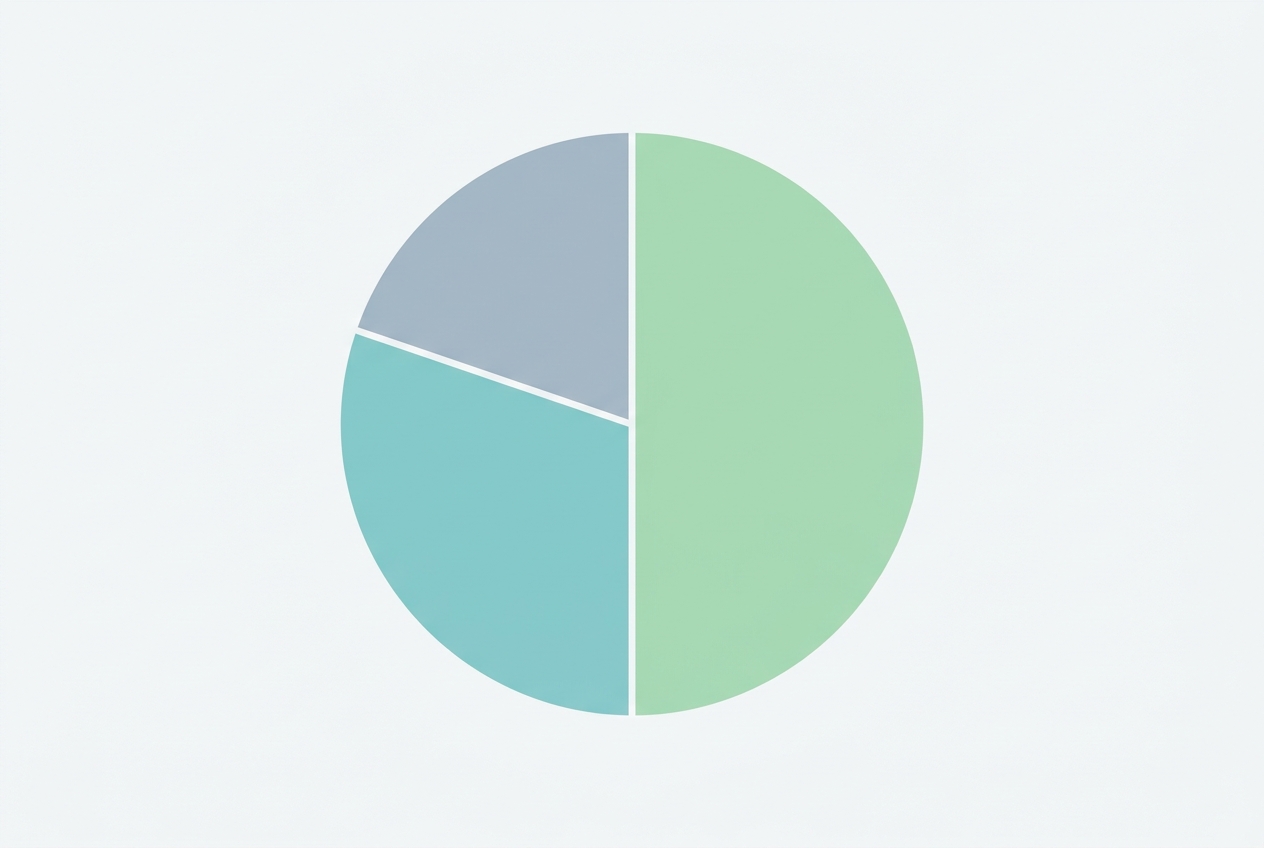
Managing money does not have to be complicated. Many people avoid budgeting because typical methods require tracking every single penny, which is exhausting and hard to sustain. If you want a simpler way to organize your paychecks, the 50/30/20 rule is an excellent starting point.
Elizabeth Warren, a legal scholar and senator, popularized this guideline. It divides your after-tax income into three distinct categories: needs, wants, and savings. By splitting your money this way, you gain a clear picture of your spending without feeling restricted.
The 50/30/20 Breakdown Table
To make this rule practical, let us look at how a monthly post-tax income of $5,000 would be divided under the 50/30/20 rule:
| Category | Percentage | Monthly Allocation | Common Examples |
|---|---|---|---|
| Needs | 50% | $2,500 | Rent/Mortgage, Groceries, Utilities, Basic Transport |
| Wants | 30% | $1,500 | Dining Out, Travel, Concerts, Subscriptions |
| Savings | 20% | $1,000 | Emergency Fund, Retirement Accounts, Debt Paydown |
First: Fifty Percent for Needs
Needs are the expenses you must pay to survive and keep your life running. This category includes your rent or mortgage payments, groceries, basic utilities (like electricity and water), insurance, car payments, and minimum debt payments.
If your needs exceed fifty percent of your income, it is a sign that you might be overextended. You may need to look for ways to lower your fixed expenses, such as shopping at cheaper grocery stores or looking for a roommate.
Second: Thirty Percent for Wants
Wants are the things that make life enjoyable but are not strictly necessary. This includes dining out, concert tickets, vacations, streaming subscriptions, and hobby gear.
The beauty of the 50/30/20 rule is that it gives you permission to spend thirty percent of your income on these items guilt-free. You do not have to feel bad about buying a coffee or meeting friends for dinner, as long as it fits within this boundary.
Third: Twenty Percent for Savings and Extra Debt Paydown
The remaining twenty percent goes toward building your financial security. You should use this money to build an emergency fund, contribute to retirement accounts, or make extra payments on high-interest credit card debt.
Investing or saving a fifth of what you earn creates a margin of safety for the future. Over a ten-year period, saving $1,000 a month accumulates to $120,000 in raw savings alone, before factoring in any compound interest.
Getting started is simple. Take your monthly take-home pay, calculate the limits for each category, and adjust your habits accordingly. The goal is progress, not perfection.